


Adrian Lancaster Recognized with President’s Outstanding Staff Award
Published: April 16, 2026
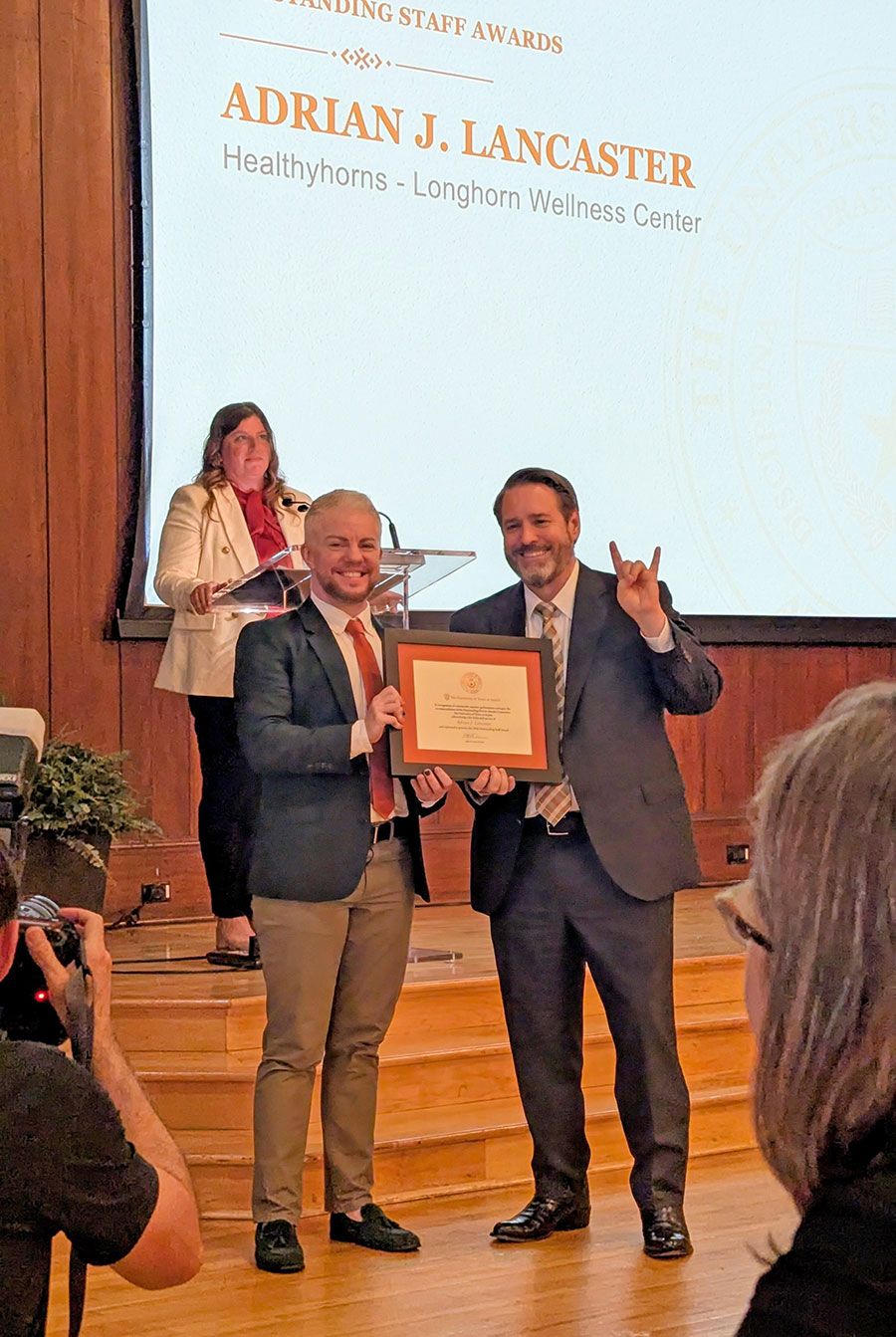
Adrian Lancaster, Longhorn SHARE Project Coordinator in the Longhorn Wellness Center, has been named a 2026 President’s Outstanding Staff Award recipient — one of the university’s highest honors for staff excellence.
The Outstanding Staff Awards Program recognizes non-teaching employees whose dedication, innovation and service have made a significant impact on the university. Honorees are selected for demonstrating excellence in areas such as collaboration, customer service, process improvement and performance above and beyond their regular responsibilities.
“He balances professionalism with warmth and creates a space where students feel seen, supported and valued,” said Katy Redd, executive director of the Longhorn Wellness Center.
Since joining UT Austin in 2015, Lancaster has held multiple roles across campus, building a career centered on student development, connection and well-being. Originally from Illinois and most recently moving to Austin from New Hampshire, he brings a background in sociology and human relations, along with extensive experience in academic advising and student support.
Before joining the Longhorn Wellness Center, Lancaster worked in academic advising for the Moody College of Communication’s Radio-Television-Film program and the Bridging Disciplines Programs certificates, and then as a Program Coordinator with the University Leadership Network (ULN), where he developed and led programming focused on career development, leadership and resilience for large student cohorts. During his time in ULN — particularly throughout the COVID-19 pandemic — he gained firsthand insight into the shared challenges students faced, including feelings of isolation and disconnection.
Building Connection Through Peer Support
In 2021, Lancaster was hired by the Longhorn Wellness Center with a clear but ambitious charge: create a mental health peer support program for students. His previous experiences helped shape his vision for what would become the Longhorn SHARE Project.
“I kept seeing students going through the same things but thinking they were alone,” Lancaster said.
At the time, few universities offered structured peer-based mental health support. Drawing on research, campus input and student feedback, Lancaster built SHARE from the ground up — starting with a small advisory group of 10 students and launching a pilot in 2022.
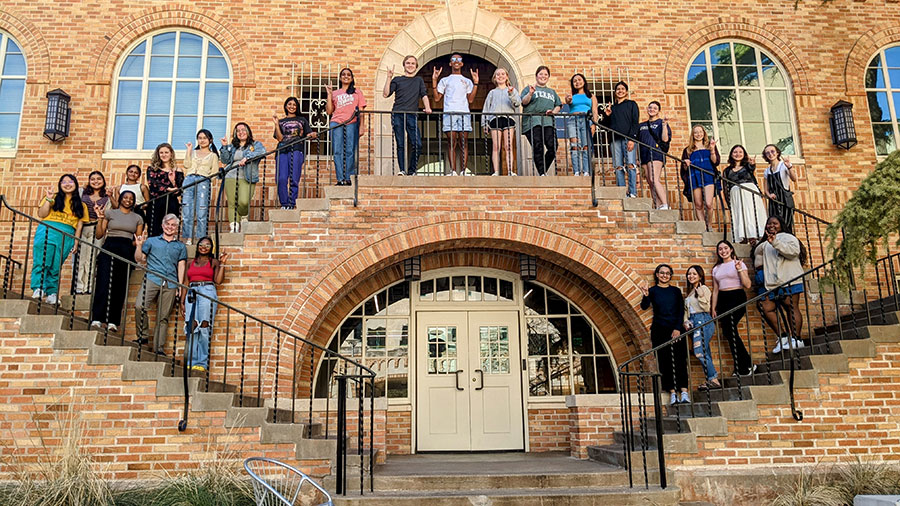
Following the pilot, the program officially launched later that fall. Early offerings included both group-based and individual peer support, with the program quickly evolving to focus on scalable, community-centered models like SHARE Communities and SHARE Circles.
SHARE Circles have become a particularly impactful tool, reaching large numbers of students where they are and creating space for open, meaningful dialogue. Campus groups like Texas Darlins and Ramshorn Scholars have brought Circles back multiple times, reflecting their value in building connection and supporting students. SHARE Communities — weekly peer support groups with a wide range of relatable topics — provide a deeper experience, giving students a place to feel at home, process shared struggles and grow alongside each other over time.
Today, SHARE includes dozens of trained student facilitators and serves over 1,000 students each year.
SHARE’s growth has been driven largely through relationships and word-of-mouth, with referrals from students, faculty and campus partners helping expand its reach. This approach reflects Lancaster’s philosophy that meaningful engagement happens through trusted connections.
This peer-to-peer support initiative is more than a program — it is a lifeline for students navigating the challenges of college life.
- Ashley Richardson Minnitt, a staff nominator and director of Longhorn TIES Neurodivergence Support

Impact That Extends Beyond the Program
Beyond the program itself, participants say Lancaster’s leadership has had a lasting and personal impact.
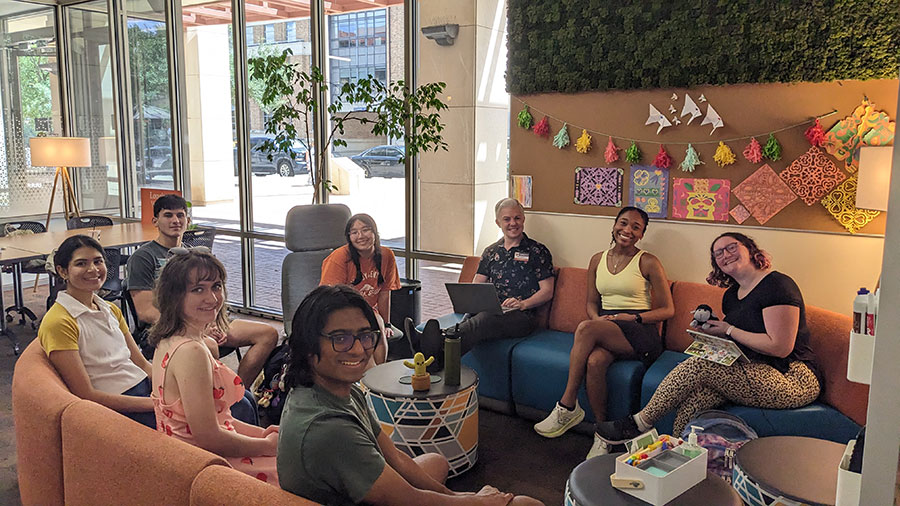
“Adrian was one of the first adults I felt I could really trust,” said Julia Mahavier, a former student and teaching assistant. “He helped me believe in myself in a way that changed how I see myself and others — both in my professional path and in my everyday life.”
For many students, that impact extends well beyond their time in the program.
“He’s taught me skills I’ll carry into graduate school and the workforce,” said student nominator Rasikapriya Krishna. “I’ve become more reflective, open to feedback and kinder to myself just by following the example he sets.”
Through reflections and program feedback, Lancaster has seen consistent outcomes: increased confidence, improved well-being and stronger interpersonal skills that extend beyond the program into students’ daily lives.
The most meaningful part is watching students grow. They start to trust themselves, see the impact they’re making and carry those skills into other areas of their lives.
- Adrian Lancaster
Leadership Behind the Scenes
While the program has remained consistent externally, Lancaster has continuously refined its internal processes — from training and curriculum to outreach and student support. As the sole staff member leading SHARE, he oversees everything from student training to program assessment and campus partnerships
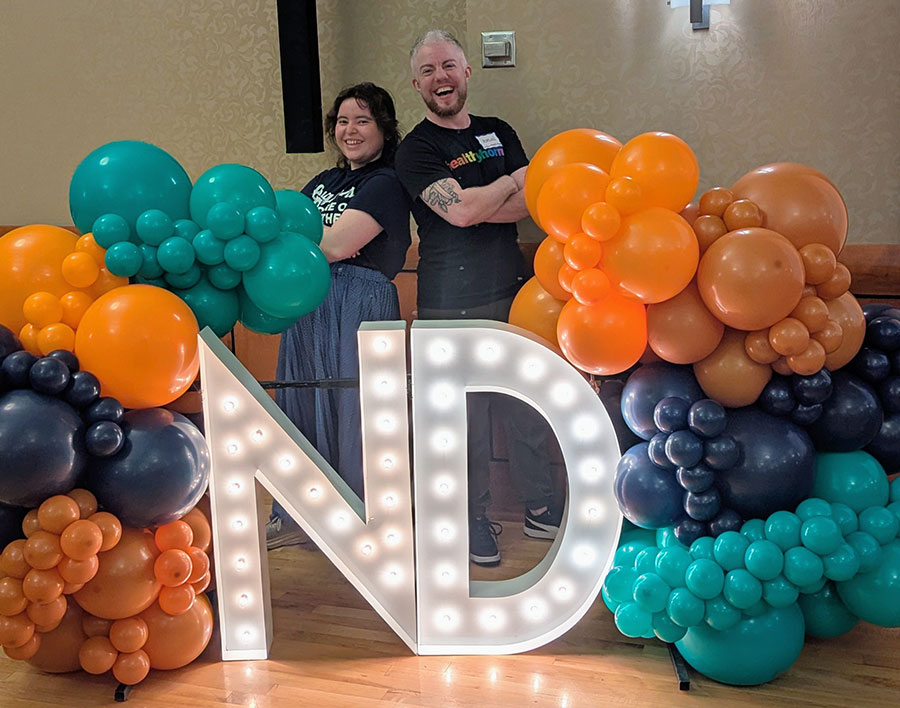
“Adrian singlehandedly manages an enormous number of tasks to provide this mental health service for UT students,” said Karen Weems, staff nominator and Assistant Director for TIP Scholars.
Lancaster has also expanded his impact beyond students, facilitating Mental Health First Aid training for more than 300 faculty and staff members.
Looking Ahead
As SHARE continues to grow, Lancaster is focused on expanding its impact across campus. His goal is to share peer support and facilitation skills more broadly — especially with student leaders in areas like residence life and student organizations.
By equipping more students with these tools, he hopes to contribute to a broader culture of connection and support at UT.
“There’s an opportunity to extend this beyond one program,” Lancaster said. “The more students who have these skills, the more they can support each other as a campus community.”