


Set Up Your Room for Sleep Success
Seven to nine hours of sleep a night is essential for academic health.
Click on the numbers in the image below to learn how each item in your room contributes to a successful night's sleep.
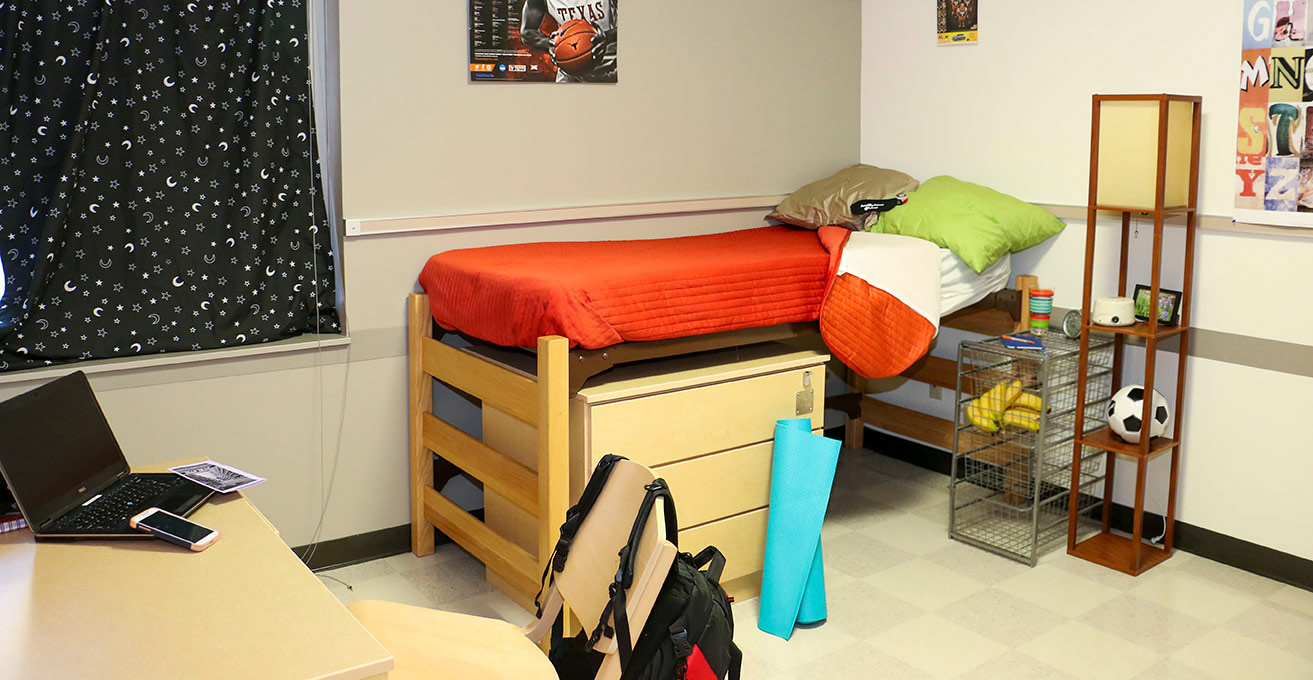
Pillows
- Use pillows that keep your spine and neck in a neutral position, whether you sleep on your back, side or stomach.
Bedside Table
- A white noise machine can mask disruptive noises.
- Keeping a journal to write down thoughts and to do’s can relieve stress.
Exercise
- Exercising regularly will energize you during the day and help you sleep better at night.
- Avoid a vigorous workout three hours before bedtime.
Sheets and Blankets
- Choose comfortable materials that keep you at a comfortable body temperature.
Stretch
- Light yoga or stretches help relax the body and clear your mind before bed or if you’re having trouble falling asleep.
Mattress
- Soft or firm is up to your personal preference.
- Mattress pads can help make beds more comfortable.
Blackout Shades and Eye Mask
- Darkness cues the body that it’s time to sleep.
Cell Phone and Computer
- Keep devices away from your bed and turned off or on silent.
- End usage 30 minutes before bedtime, as the blue light emitted can keep you awake.
- Use a blue-light filter starting three hours before bedtime.
Breakfast
- Waking up at a consistent time and eating breakfast can help you stay on routine and nourished for your day.
School Work
- Complete schoolwork at a desk, not in bed.
- Use your bed for sleep only.